

Every business owner knows: people make or break a company.
No matter how good your product or strategy is, the culture of your team decides whether your company grows or collapses.
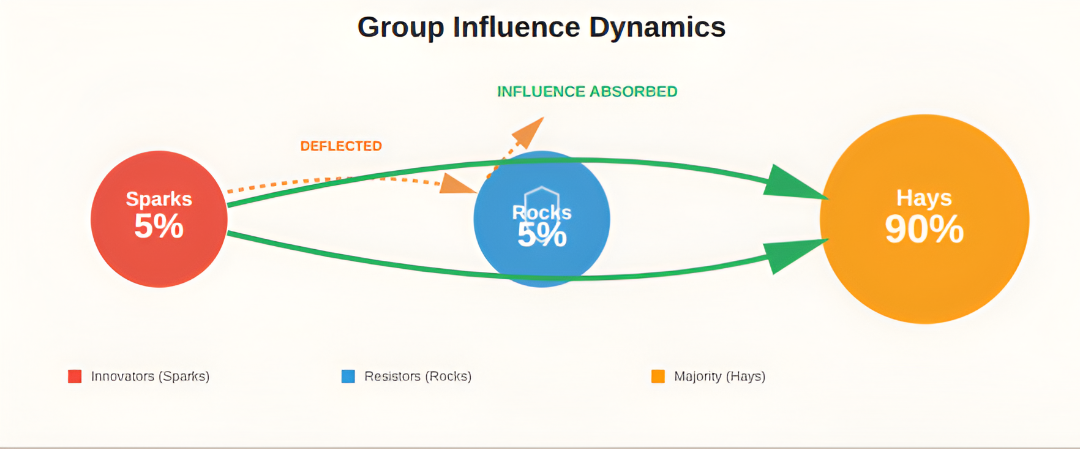
And in every company, you’ll find 3 types of people: Sparks, Hays, and Rocks.
Let’s break them down.
Sparks: The Fire-Starters
Sparks are manipulative, politically smart, and thrive on creating chaos.
They’re the ones who stir up trouble, spread negativity, and play games behind the scenes.
👉 In Hindi: “Ye log aag lagane ka kaam karte hai.”
Why they’re dangerous: They distract everyone else, lower morale, and damage the company’s culture from within.

Rocks: The Company’s Pillars
Rocks are stable, loyal, and don’t get affected by Sparks.
They believe in the company, respect the culture, and usually stay for the long run.
These are often the pillars of the organization — leaders who genuinely want the company to succeed.
⚠️ But here’s the twist: when Rock vs Rock happens (two strong personalities clash), it can also create chaos if they’re not aligned.

Hays: The Easily Influenced Majority
Hays make up 90% of the company.
They’re hardworking but highly impressionable. They get easily swayed by Sparks — often without realizing it.
This is why Sparks are so dangerous: they can manipulate the Hays, causing teams to lose focus, break discipline, and damage the culture.

The Real Danger: Sparks + Hays
Individually, Sparks are only a few people (2–5%). Rocks are also few (2–5%).
But Hays are the majority (90%). When Sparks influence Hays, the culture collapses.
That’s why the most dangerous combination in any company is: Sparks + Hays.
What Business Owners Must Do
As a business owner, your biggest responsibility is protecting the company’s culture and morals.
That means:
- Identifying Sparks early
- Limiting their influence on Hays
- Even firing them if needed — no matter how talented they are
Longevity and success depend not just on strategies or revenue, but on a strong, healthy culture.
Key Takeaway
Culture > Talent. Even the most skilled “Spark” should be removed if they weaken the culture.
Hire for culture, fire for culture — because protecting your company’s ethos is the only way to ensure longevity and success.
FAQs on types of employees in a company
Q1. How do I know if someone is a smart troublemaker or just a strong personality?
A strong personality challenges ideas but still respects the company and its culture. A smart troublemaker, on the other hand, thrives on turning people against each other and creating division. Their intent is destructive, not constructive.
Q2. What should I do if my top performer turns out to be a smart troublemaker?
Even if they bring revenue, these employees eventually poison the culture by turning others against each other. Long-term success comes from protecting culture over keeping one toxic performer. In most cases, it’s better to part ways.
Q3. Can easily influenced employees grow into steady, loyal ones?
Yes. With the right mentorship and cultural guidance, employees who get easily swayed when someone fills their ears with negativity can mature into steady and loyal pillars. But only if they are shielded from the troublemakers.
Q4. How do I handle conflict between two steady, loyal employees?
When two strong and steady employees clash, it can destabilize the company. The key is alignment. As the business owner, you must mediate: define roles, align goals, and make sure their energy is directed at competitors, not each other.
Q5. What’s the best way to test if my culture is healthy?
Ask yourself: if I stepped away for six months, would my employees protect the culture — or would the troublemakers influence the easily swayed majority? The answer reveals the strength of your culture.
Note from JM
Your team will always have Sparks, Hays, and Rocks — but your leadership decides which of them shape the future of your business.
Choose culture first. Protect it at all costs.
I hope you found this relatable and helpful. If you have any doubts or would like to connect with me personally, please email me at jiteshmanwani@gmail.com